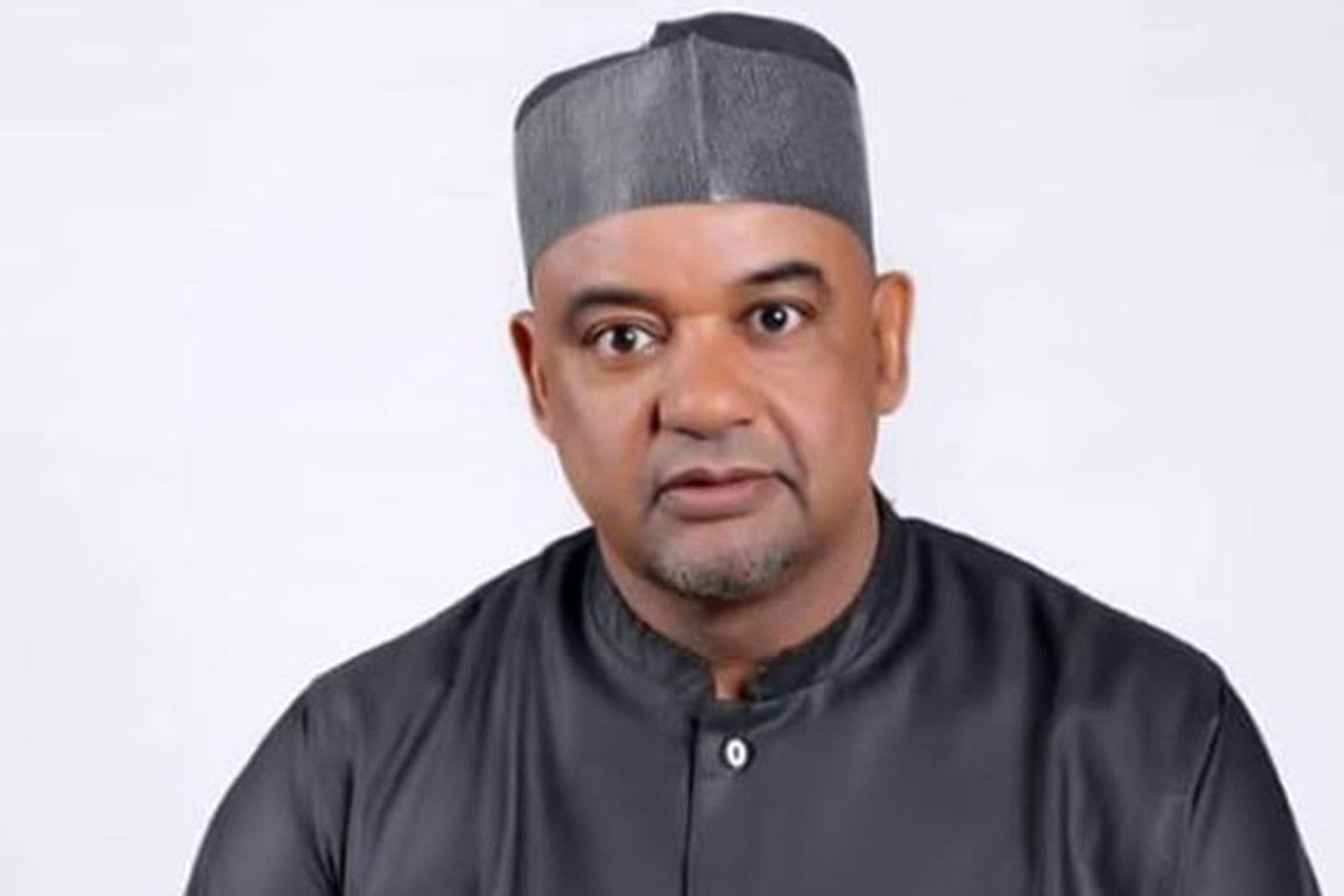
The Supreme Court of Nigeria just sacked the Tanimu Turaki led National Working Committee of the opposition People’s Democratic Party.
The party itself is now claiming there is a power vacuum.
That, obviously is the way they want to read the judgement and present situation.
There are however other ways to read this.
First, is there any interpretation of the April 30 ruling that would restore the National Working Committee led by Umar Ilya Damagun, who was national chairman of the party before the disputed convention.
All of the litigants appear to be interpreting the judgement the way they want.





Legal experts who are not party to the dispute are also offering differing views.
Some of the points of contention are whether the apex court, apart from sacking Turaki, has also affirmed the expulsion of Sam Anyanwu who along with Abdurrahman Mohammed are presently claiming leadership of PDP.
What can the party now do without falling foul of court orders.
Just as important is how the Supreme Court ruling will affect proceedings in the lower courts that are yet to be determined.
The apex court, in a split decision on Thursday annulled the November 15, 2025 Ibadan Convention, where Turaki and other members of his committee were elected.
The convention took place despite a court order stopping the party from conducting it.
The judgement of the court for legally untrained minds looks like the very definition of the now infamous Latin phrase ‘status quo ante bellum’.
Unlike the Court of Appeal which just threw the phrase into parts its ruling, the apex court was more explicit on the fate of the November 15 convention.
In the majority judgement, Justice Stephen Adah described the disregard of a Federal High Court order in the conduct of the convention by Damagun as a threat to the administration of justice in Nigeria
It was also explicit on one of the last acts carried out by the Ilya Damagun led NWC, which was the suspension of some of its members including Sam Anyanwu, Kamaldeen Ajibade and Umar Bature.
The trio, along with a handful of others subsequently went ahead to form a new faction of the PDP.
That faction in now dead, which could put their cases in the lower courts and their ‘locus standi’ to challenge the party in jeopardy.
In the majority judgement, Justice Stephen Adah described the disregard of a Federal High Court order in the conduct of the convention by Damagun as a threat to the administration of justice in Nigeria.
In that sense, the stakes in the ruling were just as high for the judiciary, judicial authority, and for the opposition political parties and their participation in the next general elections.
It is also coming at a time of eroding public trust in the Supreme Court with the judiciary seemingly at war with itself.
There were genuine concerns that a judicial pronouncement could disrupt the entire electoral process.
There are precedents for this and June 12 readily comes to mind.
But it wasn’t just the rule of law that was at stake.
The Independent National Electoral Commission and its chairman, Prof. Joash Amupitan were also on trial.
The PDP case exemplified the willingness of courts of coordinate jurisdictions to give competing and contradicting rulings on the same legal disputes; a problem that has plagued Nigerian courts for decades.
It came in full view in the current PDP legal tussle.
Somehow, the Supreme Court, with this ruling managed redeem some of its lost reputation, repudiated the overreach by the Court of Appeal and restored some of Amupitan’s professional integrity.
Thanks to the apex court; democracy, it seems has survived the relentless scheming of politicians, the lack of independence of the electoral umpire and an untethered judiciary.
At least for now.
The court put the 2027 general elections back on track by ensuring there will be an open contest against the ruling All Progressives Congress.
It however blamed one of the rival PDP factions for the contradicting rulings of two separate Federal High Courts, absolving the courts of any responsibility.
It is not for nothing that the Supreme Court had earlier ordered lower courts to stop interfering in internal party conflicts.
Political parties are first and foremost, platforms for managing individual ambitions, which in many instances do not align, and no law or constitution can unite two opposing ideologies or get politicians to play by the rules.
Yet lower court rulings demand parties to check every box and get their details right before a convention can be held.
Because one individual is aggrieved, lower courts hold the party hostage and even effectively rule that it can’t participate in elections.
In this case, it was PDP disagreements over congresses in one or two states out of a total of 36.
That is not a standard any party can live up to. It is not a standard the Supreme Court has insisted on in past election disputes.
The court has always been satisfied with a ‘substantial compliance’ with the Electoral Act.
The Supreme Court’s PDP ruling came on the same day it set aside the Court of Appeal order asking disputing parties in another opposition political party, the ADC to maintain ‘status quo ante bellum’.
INEC interpreted that order by de-recognising the leadership of the ADC headed by former Senate President David Mark.
INEC’s decision effectively left the ADC without a leadership just when the window to conduct party primaries was weeks away from closing.
A delay in judgement by the Supreme Court would have denied the ADC the opportunity to participate in the 2027 general elections.
According to the timetable released by INEC, political parties have to conduct their presidential primaries by the end of May 2026.
The multitude of ligations bedeviling both the PDP and ADC have already hindered their ability to plan ahead and organise party primaries.
Even before the Supreme Court ruling, ADC had called on the electoral umpire to extend the time frame for the conduct of primaries to the end of July.
While ADC can go back to planning for party primaries and the 2027 elections, the PDP now seems to be the party without a leadership.
Chairman of the party’s Board of Trustees and former Senate President Adolphus Wabara, hours after the apex court ruling stepped in to take control of the party’s structures claiming it to be a constitutional intervention to avoid a power vacuum.
But here’s the problem, there is no legal basis for such a move based on the party’s constitution.
Should the party set in motion a process for Damagun to call a meeting, its NEC should then be able to dissolve Damagun’s NWC and replace it with the an interim one made up of those elected in Ibadan
Before making the declaration, Wabara’s BoT was in a meeting with Governor Seyi Makinde of Oyo and Governor Bala Mohammed of Bauchi, who has now dumped the party, where they likely came up with the idea of the BoT taking charge.
Legal experts are already questioning the powers of the BoT insisting it is only an advisory body.
As much as the governors and other stakeholders want to put the difficult days associated with Damagun’s leadership behind them, Damagun and the then NWC, which was dissolved at the Ibadan convention is more likely than Wabara to meet the legal requirements for calling a National Executive Committee meeting in the wake of the Supreme Court ruling.
For one, just like the election of Turaki, the dissolution of the Damagun NWC is now null and void.
Should the party set in motion a process for Damagun to call a meeting, its NEC should then be able to dissolve Damagun’s NWC and replace it with the an interim one made up of those elected in Ibadan.
This could offer a way out of the legal and political challenges and pave the way for smooth party primaries.
The party has every reason to be wary of Damagun’s return.
The genesis of the crisis plaguing the party can be traced to his initial alignment with Nyesom Wike and his determination to hold on to the party leadership come what may.
The result is what is playing out today.
Yet, the Supreme Court has offered the party a way out of the present predicament.
Now the party’s actions just need to the pass the high legal hurdles set by lower court judges.
Insisting on Wabara and the BoT taking control would be no different from going ahead with a convention a high court had ruled against.