Incredible elections are won and lost in the dead of night, long after voters who stood guarding their votes are fast asleep.
That is, for contestants relying on the dark arts, handing concocted election results to electoral officials at gun point or simply compromising the relevant officials.
Free, fair and credible elections, on the other hand, stand on a tripod of rules and institutions; a sound electoral law, the independence and impartiality of the electoral umpire, and the ability of the courts of law to deliver justice in electoral disputes.
All three are screaming for attention and not all stakeholders are listening.
In the past; the courts, the electoral umpire and the electoral law have also been responsible for incredible electoral outcomes.
Right now, the governing elite might just be laying the groundwork for similar outcomes in 2027.





We saw this in the 2007 general elections when INEC declared Umaru Yar’Adua president before all of the results were collated and repeatedly at polling stations when the number of voters captured in the results exceeded the number of registered voters at polling units.
We saw it in 2019 after INEC declared Emeka Ihedioha of the PDP winner of the governorship election only for the Supreme Court to declare Hope Uzodinma of APC, who came fourth, the eventual winner.
As for the electoral law, it has always been at the mercy of politicians.
At every turn and during every election cycle, it is usually sitting presidents seeking re-election, sitting governors seeking advantages and members of the National Assembly that stand in the way of comprehensive electoral reforms.
Over 26 years of democratic governance, imperfect laws have allowed politicians, INEC and the courts to produce near impossible election outcomes.
The country is now at a defining crossroads.
The electronic transmission of election results has the potential to do away with the multiple layers of collation.
In the presidential election, results are first collated at the ward level, then moved to collation centres at the local government before moving to state collation centres.
For practical purposes, if results are transmitted electronically, there will be need for only one collation centre.
The same goes for state assembly seats, governorship and senatorial seats.
The multiple layers of collation can be done away with.
Agents of political parties will now need to appear only at polling units and one collation centre where they can tabulate and verify results step by step.
Yet, the results from each of the 176,000 polling units, each ward, each of the 774 local governments and the 36 states will still be computed and available electronically for the sake of accountability and for any litigation that might arise.
Getting every local government and every state to publicly announce the presidential election outcome becomes a matter of formality and maybe, to promote transparency.
The next general elections are roughly one year away.
Yet, there is once again, a credibility crisis engulfing a process that has not begun.
That is in spite of the fact that Nigerians have shown a desire for improvements in the Electoral Law to insulate the electoral process from the fraud perpetrated by politicians.
It however wasn’t the politicians that triggered the present advocacy to adopt technology.
It was the Supreme Court.
Now the entire country is rallying together to protect the process from the courts, who are increasingly determining the winners in elections, rather than voters.
The whole clamour for enshrining electronic transmission in the Electoral Act is as much an effort to save the integrity of elections as it is an effort to save the will of voters from the miscarriage of justice from election tribunal.
Once upon a time, politicians relied on thugs to disrupt the voting process, snatch ballot boxes and stuff them with ballot papers already stamped in their favour
The Supreme Court, in its ruling on the outcome of the 2023 presidential election had said results transmitted electronically could not be the basis for collation and in effect, litigation since it wasn’t part of the 2022 Electoral Act.
Earlier this month, the Senate under the leadership of Godswill Akpabio got in the way of the attempts to correct that loophole in the law that the Supreme Court relied upon to uphold President Bola Tinubu’s election in 2023.
The House of Representatives, had late last year passed its own version of the Electoral Bill in which it made the electronic transmission of results in real time mandatory.
This could prove revolutionary in the transparency and conduct of elections.
Since 1999, elections in Nigeria and how they are manipulated have significantly evolved.
Once upon a time, politicians relied on thugs to disrupt the voting process, snatch ballot boxes and stuff them with ballot papers already stamped in their favour.
Today, there are still pockets of violence and politicians who think snatching and stuffing ballot boxes can make a difference.
It happened in Dagiri community in Gwagwalada, FCT during the 2023 National Assembly election.
The focus of electoral fraudsters then turned to results sheets.
There are testimonies on this from members of the NYSC, fresh from university and who make up the bulk of IINEC ad hoc staff for the conduct of elections.
A number of the youths have reported being influenced to rewrite polling unit results in buses while on their way to collation centres.
But ultimately, today, the real rigging takes place at the collation centres.
Again in 2023, Okezie Ikpeazu, who was Abia governor at the time of the election led the police commissioner in the state and a retinue of supporters to the collation centre at Obingwa local government of the state while election officials were collating results.
The election still didn’t go Ikpeazu’s way.
But party agents in different parts of the country are routinely denied access to collation centres.
All of this is why politicians find the electronic transmission of results so dangerous.
In the end though, what the Senate has come up with is a proposal that pays lip service to the use of electronic transmission of results, while at the same time ensuring that the manual recording and transfers of the same results is the primary source for collation, and just as importantly, is admissible as primary evidence in court.
In a way, this makes the existence of e-transmission in the bill meaningless.
Going back to the 2019 presidential election tribunal, the server where INEC stored electronically transmitted results were a big part of the case of the opposition party.
Like was the case in 2023, evidence from the server was inadmissible in court because of the vagueness of the law.
More precisely, electronic transmission was only part of INEC’s guidelines and regulation.
The Supreme Court, in spite of the Electoral Act 2022, denied INEC the powers to set legally binding guidelines and regulation on how to treat election results.
The courts, the second of the necessary tripod needed for credible elections, have immersed themselves into partisan politics and internal party politics, effectively excluding the main opposition party, from the build up to the polls.
There have been suggestions made by different panels like 2008 Mohammed Uwais Electoral Reform Committee on how to insulate the commission from political interference
By annulling the Ibadan convention of the opposition People’s Democratic Party and recognising the Nyesom Wike backed faction, the Federal High Court in Oyo, has left the remaining four state governors in the party practically without a platform to contest elections and participate in the electoral process.
Forget that Wike’s faction only had a few dozen members compared to the thousands and majority of state party executives in the Tanimu Turaki led faction.
The party has already been disqualified from the upcoming governorship election in Ekiti and the FCT council elections.
Now coming to the electoral umpire.
The notion that INEC functions in any kind of independence has long been erased from the minds of Nigerians.
There have been suggestions made by different panels like 2008 Mohammed Uwais Electoral Reform Committee on how to insulate the commission from political interference.
None of the recommendations has seen the light of day.
Instead, what we have seen are more reasons to question the integrity of the electoral process.
A case in point is the recent nomination of the past INEC chairman, Mahmoud Yakubu for an ambassadorial position.
To voters, it looks like compensation for paving Bola Tinubu’s way to the presidency.
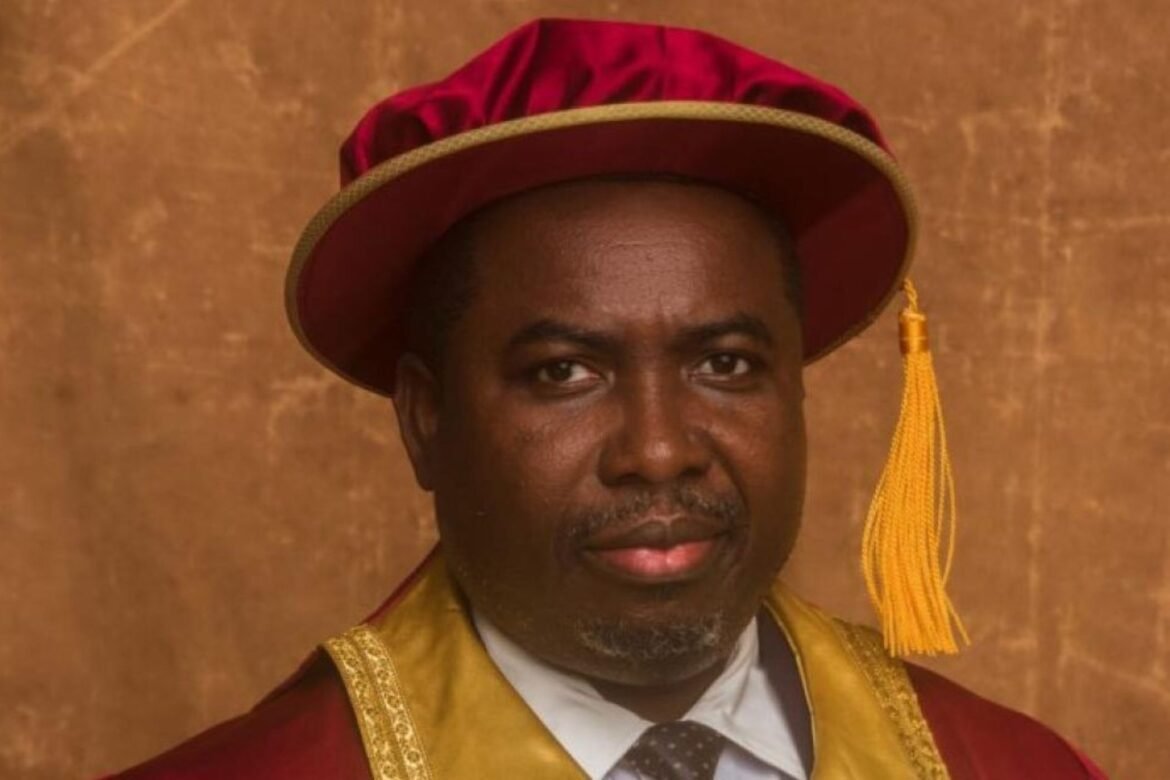
Then there is the new head of the electoral umpire, Joash Amupitan.
He has been mired in a controversy from the very moment he took office.
He has almost become the main story and issue of contention even though he is not a contestant.
He might as well be.
The questions swirling around him cast doubt on his impartiality towards all segments of the society.
These are not the kind of conditions under which free, fair and credible elections are conducted.