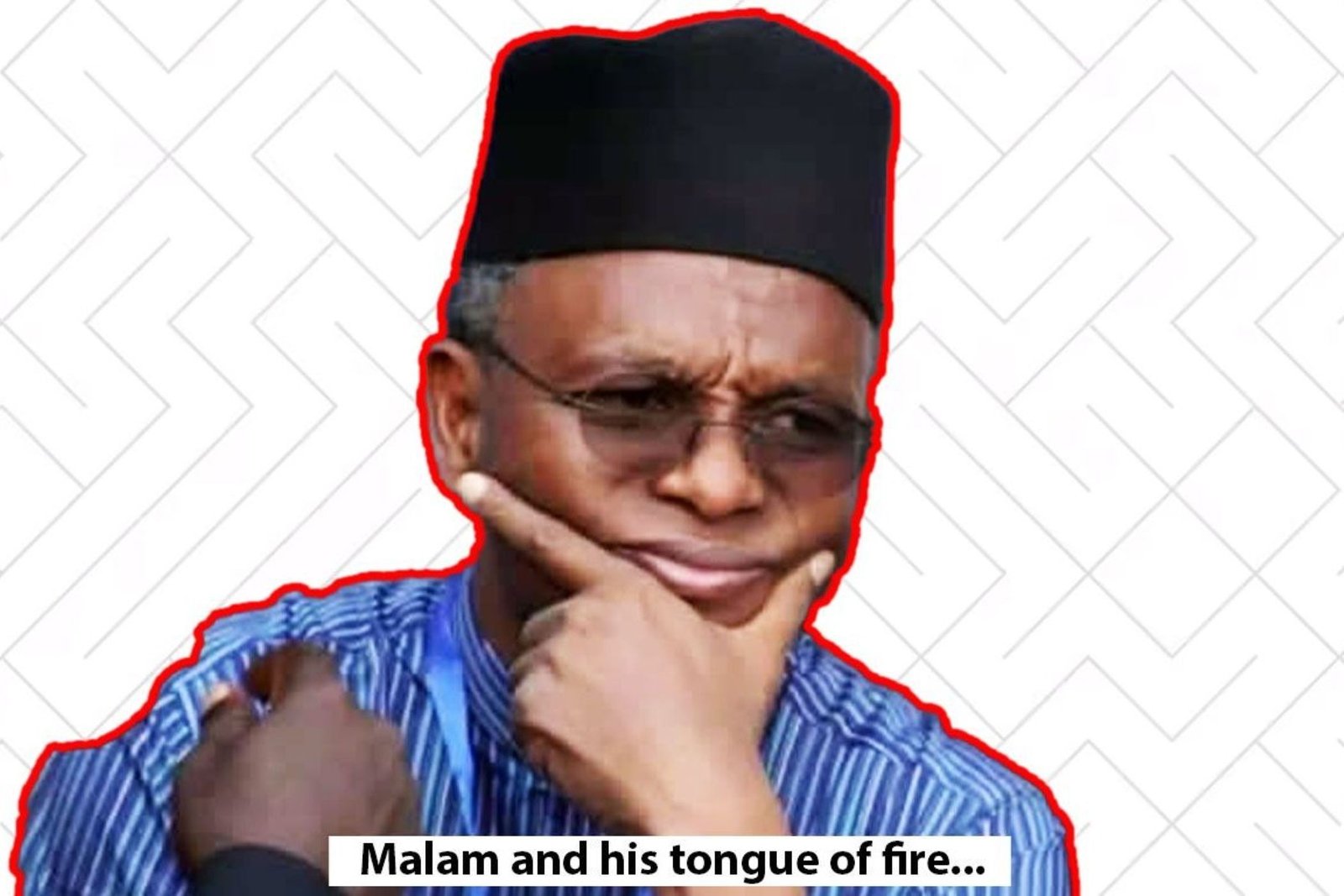
My mother used to warn me that the words of my mouth could claim my head if I weren’t careful.
She should have saved that warning for another man: Nasir El-Rufai, former minister and governor of Kaduna State.
I’ve often joked that even if you beheaded El-Rufai and minced his skull, his tongue would still be wagging.
Those who have been in his crosshairs might agree.
He once said even if President Muhammadu Buhari were hit on the head with a Blackberry phone, the former president might still not know the difference between the phone and a blackberry fruit.
His rhetoric against Vice President Atiku Abubakar was no less brutal.

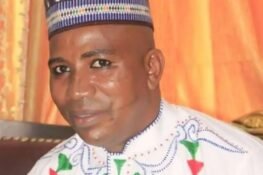


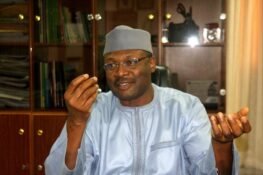
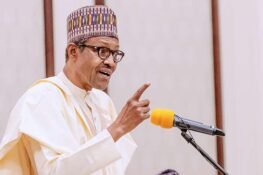
He accused the former vice president of playing “SIM-card politics,” describing Abubakar as a serial defector and a born-again saint who forgot his own past confessions.
If his mouth could kill him, the former governor would have been dead many times.
His tongue almost trapped him during President Umaru Musa Yar’Adua’s administration, but he managed to escape; yet, even in exile, he would not be silenced.
Talking up a storm
He may have talked himself into trouble again – this time, claiming publicly that he tapped the phone of his old friend and National Security Adviser Malam Nuhu Ribadu, and that the former Chairman of the APC, Abdullahi Ganduje, may know something about the missing social commentator, Abubakar Idris, famously known as Dadiyata.
When Ribadu emerged as the Action Congress (a legacy party of the APC) presidential candidate in 2011, El-Rufai said Ribadu was a paperweight, but the two later patched things up.
What triggered the recent spate of loose talk for which El-Rufai is now standing trial for a crime?
It began at what was supposed to be his moment of reward for backing President Bola Ahmed Tinubu’s election to office in 2023.
Against public expectation, the Senate declined to confirm El-Rufai as minister, a process many had assumed would be a mere formality.
On the campaign trail in 2023 in Kaduna, the president, then a sure-footed candidate, had summoned El-Rufai on stage and extracted, on live television and captured on camera, a promise to join the incoming government.
The nominee was a consummate bureaucrat with a reputation for getting things done.
The screening humiliation
Rather than the “take-a-bow-and-go” that many expected at the Senate, El-Rufai was publicly humiliated with a yet-to-be-declared security report, quashing a ministerial appointment he had not lobbied for and which the President had made an offer and practically compelled an acceptance.
That incident was the starting point of a political arm-wrestling match between El-Rufai and the Tinubu administration.
The controversy has dragged on like a dead weight, and El-Rufai has obviously resolved to fight – foul or fair.
It’s a self-inflicted wound that the government has handled rather poorly.
There are many things for which you could hang El-Rufai by the next pole – his brutal rhetoric, his presumptuousness, his arrogant pride, and, of course, his suppression of dissent and his calamitous mishandling of ethno-religious relations, especially between Christians and Muslims, when he was governor of Kaduna State.
A man like El-Rufai
Yet, in a country of rampantly incompetent public officers, El-Rufai is as competent a technocrat as they come.
Warts and all, he towers above his peers in courage, clarity of vision, performance and delivery.
And in the twilight of the Buhari government, when powerful cabals hijacked it, he took risks that only a few could dare.
APC hawks in the presidential villa frantically strategised to undermine an obviously fed-up Buhari, who confessed that he looked forward to the day he would have to quit the presidency.
They plotted to secure a consensus presidential candidate for the party in disregard of the unwritten code of power rotation between the North and the South, and their choice was far from Tinubu.
With a streak of devilish genius, they hatched a plan to redesign the currency in 2023, primarily targeting Tinubu.
Couched as a measure to control campaign spending, the politics behind the currency redesign policy was thinly disguised.
It turned out to be part of a grand scheme, a political vendetta, and a self-serving agenda by those who wanted to rig the political competition and eliminate the leading contender (read Tinubu) before the whistle blew.
Very unpopular for the acute financial distress it imposed on citizens and the killing blow it dealt to small businesses, the currency crisis became a needless government war against citizens.
At the same time, the political class, who were supposed to be the targets, found convenient ways to short-circuit or bypass the scheme altogether.
Moment of crisis
It was El-Rufai who rallied other governors – in a queer alliance that included himself, Bello Matawalle of Zamfara and Yahaya Bello of Kogi State – all APC governors, against an APC central government.
They went to the Supreme Court and obtained a landmark pronouncement that opened glimpses into the vistas and possibilities that true federalism in practice actually represents.
But this is a matter for another day.
The Supreme Court declared the currency redesign policy unconstitutional for failing to consult bodies such as the National Council of States and the Federal Executive Council.
It invalidated the CBN’s deadlines, nullifying the policy as an affront to the constitution and a breach of citizens’ rights amid economic hardships.
With the court ruling, El-Rufai and his obstinate brother governors were on solid ground.
He defied the CBN and addressed his people in Kaduna State, making it an official policy in Kaduna – against the federal government’s position that the old currencies remained legal tender.
Loud mouth, lone voice
He was the loudest, almost lone voice against high-wired manipulations to take the presidency and the party hostage.
His resilience and determination at every stage outsmarted those who had no reservations in trading national stability for personal interest.
If, as it has been said elsewhere, El-Rufai did this because he had a strategic long-term agenda, that is not a crime.
There were many people around candidate Tinubu at the time who had their personal agenda and yet did terribly bad things to undermine his candidacy.
The shabby treatment he received at the Senate confirmation was bad enough; freezing him out in the cold after that public humiliation was unfair and unwise.
He is fighting back, and even though he doesn’t mind sticking his tongue in a trap to get attention, he would wag it to exact an inconvenient political price from the government.
Distraction Tinubu doesn’t need
Tinubu doesn’t need the distraction.
Not because he needs El-Rufai to help him win a second term, but because trashing the former governor, despite his valuable contributions to the party and the president’s electoral success, prioritises politics over competence and charity.
The stark choice facing the government is either to drop the charges against El-Rufai immediately or to let them drag on and fester, reopening old wounds.
Whatever choice Tinubu makes, this avoidable situation has just given El-Rufai more oxygen, precisely what he wants, handed on a platter.