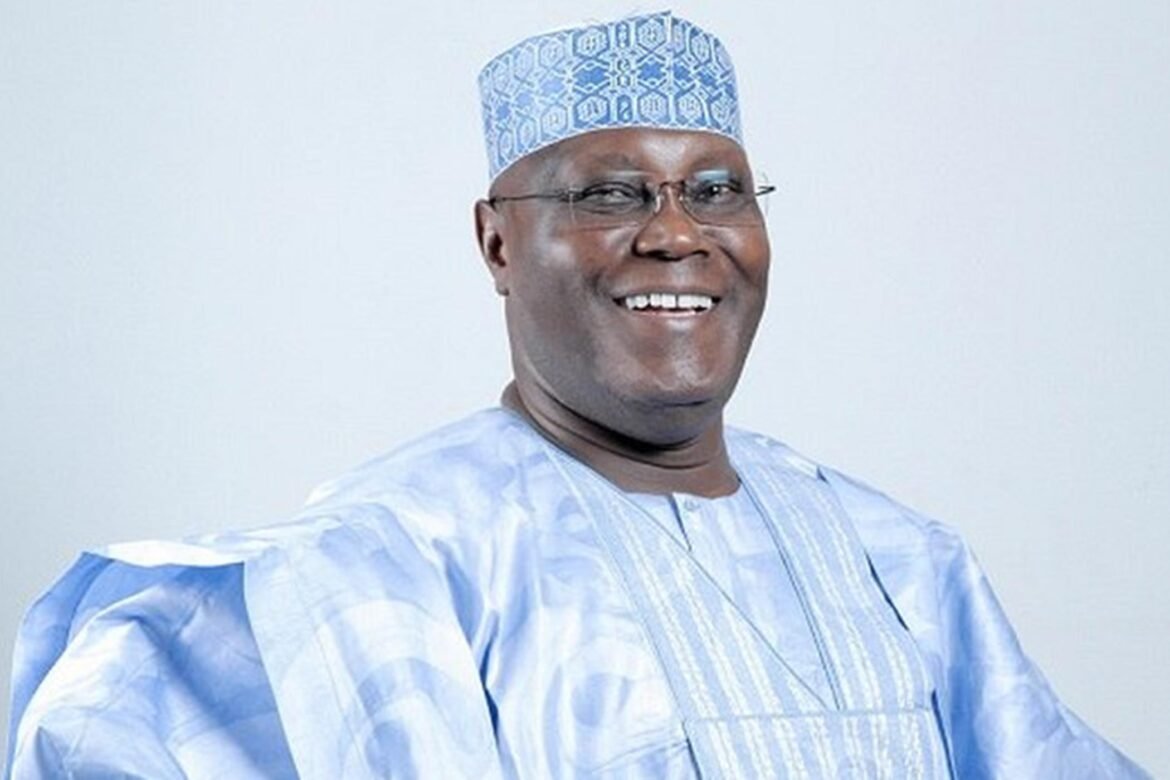
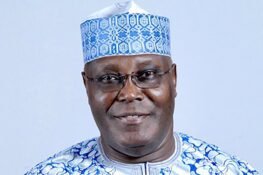
Atiku Abubakar has long reached retirement age.
In fact, it has been more than three decades since he retired from the Nigerian Customs Service, diving straight into politics, and contesting for the presidency during the NRC and SDP days in 1993.
Since then, he has been elected as governor of Adamawa State, though he was never sworn into office and instead served as Vice President to President Olusegun Obasanjo between 1999 and 2007.
And from 2007 onward, Atiku has contested in every single presidential election.
He has ignored subtle and not subtle hints that it is time to retire from politics.
Now his own son, Abba Atiku, by aligning with ruling APC and supporting President Bola Tinubu’s re-election, has come out in full force telling his father it is time to let go.
But it seems we are living in the age of political entrenchment of the octogenarians.
Whether it is Donald Trump and Joe Biden in the United States of America or Yoweri Museveni in Uganda or Abdelmadjid Tebboune in Algeria, politicians well pass their prime are contesting and holding on to power.
Many genuinely have the ability to mobilise voters.
More importantly, the constitutions of most countries have no age limit to when a contestant is too old to be president.
But if recent proposals in Nigeria were anything to go by, that constitutional hurdle may become a problem for Atiku Abubakar, and it’s not because of his age.
The protests that broke out in Tanzania following the October 2025 presidential election and the subsequent killing of hundreds of protesters were not simply the fallout of rigged elections.
For months, opposition voices were repressed and Tundu Lissu, the leader of the main opposition party, was not only disqualified, he was put under trial for a reason.
The second largest opposition party was also disqualified from the presidential election.
The result was the post-election violence.
In neighbouring Benin Republic too, the December 2025 attempted coup did not happen in a vacuum.
Opposition figures had been facing increased oppression and were even barred from the electoral process.
The main opposition party, Les Democrates, at the time of the attempted coup had already been barred from the April 2026 presidential election.
And in the parliamentary polls that just took place on January 18, 2026; the opposition parties lost every single seat.
Should the government push for this constitutional amendment in the year 2026, then what they are really calling for is the disqualification of Atiku Abubakar specifically, and that of other northern contestants
The two parties that won seats are both aligned with President Patrice Talon.
The strategy was to weaken the opposition, either with force or by sabotage.
A strategy Nigerians have now become familiar with.
Minister of the Federal Capital Territory, Nyesom Wike, needed to make himself politically useful to President Bola Tinubu.
According to Governor Seyi Makinde of Oyo, Wike made a promise to the president that he would help hold down the main opposition party, the PDP.
With the help of the courts and internal saboteurs, Wike has largely succeeded in crippling the PDP.
It has not only been bleeding state governors, INEC has disqualified it from participating in a number of local elections citing court orders.
At this point, the ruling APC boasts of 30 governors out of a total of 36 states. Now Wike appears to outlived his usefulness to the president.
He is struggling to stamp his authority on the politics of his home state of Rivers.
He also needs a new party.
In his stead, it is the president’s Chief of Staff and a former Speaker of the House of Representatives, Femi Gbajabiamila, now seeking out ways to make himself politically useful to the president.
This is coming in the backdrop of Gbajabiamila playing a less influential role in managing the presidency and losing some of his responsibilities to another presidential aide.
On January 24, 2026, the former speaker, under the banner of the National Forum of Former Lawmakers, convened a gathering in Abuja.
The primary objective of the assembly of former lawmakers was to advocate that the rotation of the presidency between the north and the south become constitutionally binding.
In a communique issued after the assembly, the forum also offered its full-throated support for the re-election of President Tinubu and even adopted him as their sole candidate for 2027.
In essence, enshrining the rotation of the presidency in the constitution is for them, synonymous with supporting the president’s re-election.
This, according to the former lawmakers, is in the interest of stability, fairness and democratic consistency.
Should the government push for this constitutional amendment in the year 2026, then what they are really calling for is the disqualification of Atiku Abubakar specifically, and that of other northern contestants.
This is democracy losing its meaning.
Coming from the president’s Chief of Staff, who happens to be a former speaker, this is a proposal that cannot be easily dismissed or lacking in the political will to push through the National Assembly and 24 of the 36 states of the federation.
Before focusing on possible constitution amendment, it’s important to look at the overall strategy.
A number of political commentators have in the last months suggested that the presidency will turn towards the ADC, which now’s houses Atiku Abubakar, Peter Obi and other opposition figures, after dismembering the PDP.
But it was hard to imagine how what was done to the PDP could be done to the ADC considering it is only now being built.
As it’s now emerging, Gbajabiamila is picking up from where Wike left off, with a new strategy and long-term political objectives.
The need to rotate the presidency between the north and south was born out of necessity and is unique to Nigeria.
In spite of numerical advantages, the north no longer has the means or the media support structure to hold on to power indefinitely.
More importantly, the south, less likely stitch together a majority of votes to claim the presidency, were no longer satisfied with just having their say.
That notion of winner takes all in the presidential system, has come to mean political marginalisation in Nigeria.
Conveniently, this proposal by Gbajabiamila restricts the rotation of the presidency to only north and south, rather than the six zones in the north and south.
Still, Bola Tinubu’s presidency has opened up another challenge and category of grievances from minorities who are no longer satisfied with just having their say, while the majority have the way.
Hence, northern Christians now demanding their right to represent the north as Vice President or even president regardless of the numbers game and the sentiments that drive voting in the region.
In fairness to the president this his making. He was denied the opportunity to be vice president because of it.
And when time came for him to pick his running mate, attacks from former Secretary to the Government of the Federation, Babachir Lawal and others were vicious and relentless.
One argument used is that it’s about inclusion as against marginalisation.
Makinde, the Oyo governor recently made the news for saying you cannot tell truth to power under President Tinubu.
Commenting on this, Sumner Sambo, the political editor at Arise News, suggested that even governors are increasingly lacking in courage to challenge President Tinubu’s political agenda.
There are even insinuations that that what has landed Kashim Shettima in the president’s bad books. He offered advice to the president’s disliking.
Sensing danger, coupled with a desire to remain in government and see the APC victorious in 2027, Minister of Culture and Tourism, Hannatu Musawa, sounded the alarm that dropping Vice President Kashim Shettima for a northern Christian could ruin APC’s chances in the next election.
Considering Makinde’s view that the presidency finds it difficult to manage dissent, it does need as many governors as possible in the APC to rewrite the constitution
Obviously, she is not looking from the same lenses with APC and presidential strategists who believe the northern establishment is too politically weak to resist.
In a very revealing interview meant to promote the idea of rotational presidency, former Speaker of the House of Representatives, Yakubu Dogara, said as much, but not in so many words.
He sidestepped questions of the numerical advantage of fielding a Muslim Vice President and subtly promoted his own credentials and experience.
It all sounds like the power of individual votes, particularly those in the north losing their potency. And democracy losing its meaning.
Felix Morka, the national publicity secretary of the APC has come out to deny that the replacement of Shettima is under consideration.
In truth, his words carry no weight unless they come from a presidential spokesman because it is the prerogative of the president to pick his running mate and not the party.
Consequently, the possibility of this scenario taking shape is very real.
And it comes back to amending the constitution or even just the electoral law, though that could be challenged in court, to enshrine the rotation of presidency between the north a south.
With the PDP close to the grave, disqualifying Atiku Abubakar, Rabiu Kwankwaso or even Kashim Shettima from contesting in 2027 could easily pave the way for Peter Obi to be the presidential candidate of the ADC.
It would also open the door for Dogora, Gen. Chris Musa or Bishop Hassan Kukah as a running mate in the APC.
This will weaken the ability of protest votes from the wider north.
But how easily can the constitution be rewritten for this scenario to manifest.
That is where the defection of state governors assumes a new significance.
The APC does not need all 36 governors in the party to win the 2027 presidential election.
Considering Makinde’s view that the presidency finds it difficult to manage dissent, it does need as many governors as possible in the APC to rewrite the constitution.
And the ease with which the presidency is able to do this will determine future political agenda and a broader constitutional amendment, effects of which go well beyond the 2031 presidential election, which Gbajabiamila put in focus at the forum of former lawmakers.