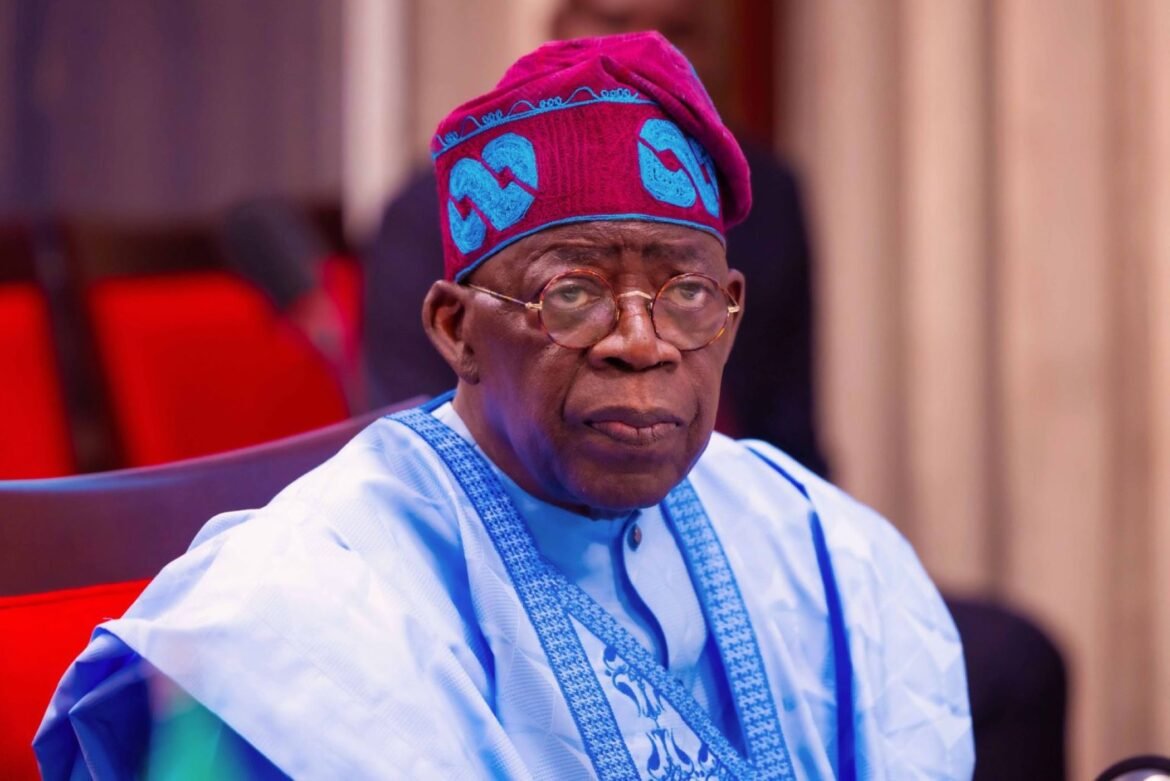
President Bola Tinubu says his administration will not negotiate with criminals, insisting that Nigeria will intensify intelligence-driven operations to defeat terrorism, banditry and other security threats.
The president stated this on Thursday while receiving traditional rulers from Oyo State, led by the Olubadan of Ibadanland, Oba Rashidi Ladoja, at the Presidential Villa, Abuja.
Tinubu commended the armed forces for their role in recent rescue operations and acknowledged the support of traditional rulers in strengthening security efforts.
“I agree with you that we should commend the men and women of the armed forces for their excellent performance.
“On behalf of them, I accept your message, and I will forward the same message to them.”
Tinubu said recent security challenges had prompted a review of the country’s security architecture and operational strategies.




“That event (Oyo school abduction) teaches us new methods, opens our eyes and challenges us to examine and re-examine our security architecture, strategy, map and operations,” he said.
The President said the Federal Government approved the expansion of the Nigerian Army from eight to 12 divisions to improve response time and strengthen operational effectiveness.
“From eight divisions, we are now moving to 12 divisions to shorten the response time and give that response the teeth that is needed for us to defeat terrorism and banditry.”
Tinubu reiterated his administration’s refusal to negotiate with criminal groups or accede to their demands.
“We refuse to negotiate for ransom. These criminals wanted us to release from detention members of their criminal gangs that were already arrested.
“That was one of their conditions outside the money they were looking for, and we said no deal. We are not going to negotiate with criminals,” he said.
According to him, many of the criminals had committed murder and other serious crimes and must face justice.
The President said insecurity in neighbouring Mali, Burkina Faso and Niger Republic had compounded Nigeria’s security challenges.
Tinubu said that the Federal Government was strengthening forest guards and pursuing the establishment of state police with safeguards against abuse.
“There will be state police, and that state police will have guardrails against abuses. We will protect it from abuses, and you traditional rulers too will have a role to play more.”
He assured that forest guards would be equipped and empowered to confront criminal elements operating in forests nationwide.
“They are not just to chase antelopes and animals. We are going to have them chase the criminals and deal with them in various forests.”
The President emphasised the importance of intelligence gathering and urged traditional rulers to encourage vigilance among their subjects.
“The mention of intelligence is very important, and I want you to take it to our people to be extra vigilant, know their neighbourhoods, know their areas and report strange people.”
Tinubu also urged governors to deploy increased federal allocations to infrastructure and security-enhancing projects.
He assured the delegation that security conditions were improving and pledged to continue investing in security agencies.
“The security challenge is getting better. We are getting a hang of it much better. Any time you come across some of our soldiers and police officers, please pat them on the back and say thank you. They are doing a good job,” Tinubu said.
Earlier, Ladoja commended Tinubu for his handling of the recent abduction incident in Oyo State, particularly the decision not to pay ransom.
“The fact that you did not pay ransom, the fact that you stood your ground shows that we now have a government that knows what is to be done. We cannot thank you enough for that feat,” he said.
The traditional ruler also urged the Federal Government to sustain security presence in forest reserves and continue ongoing infrastructure projects across Oyo State.