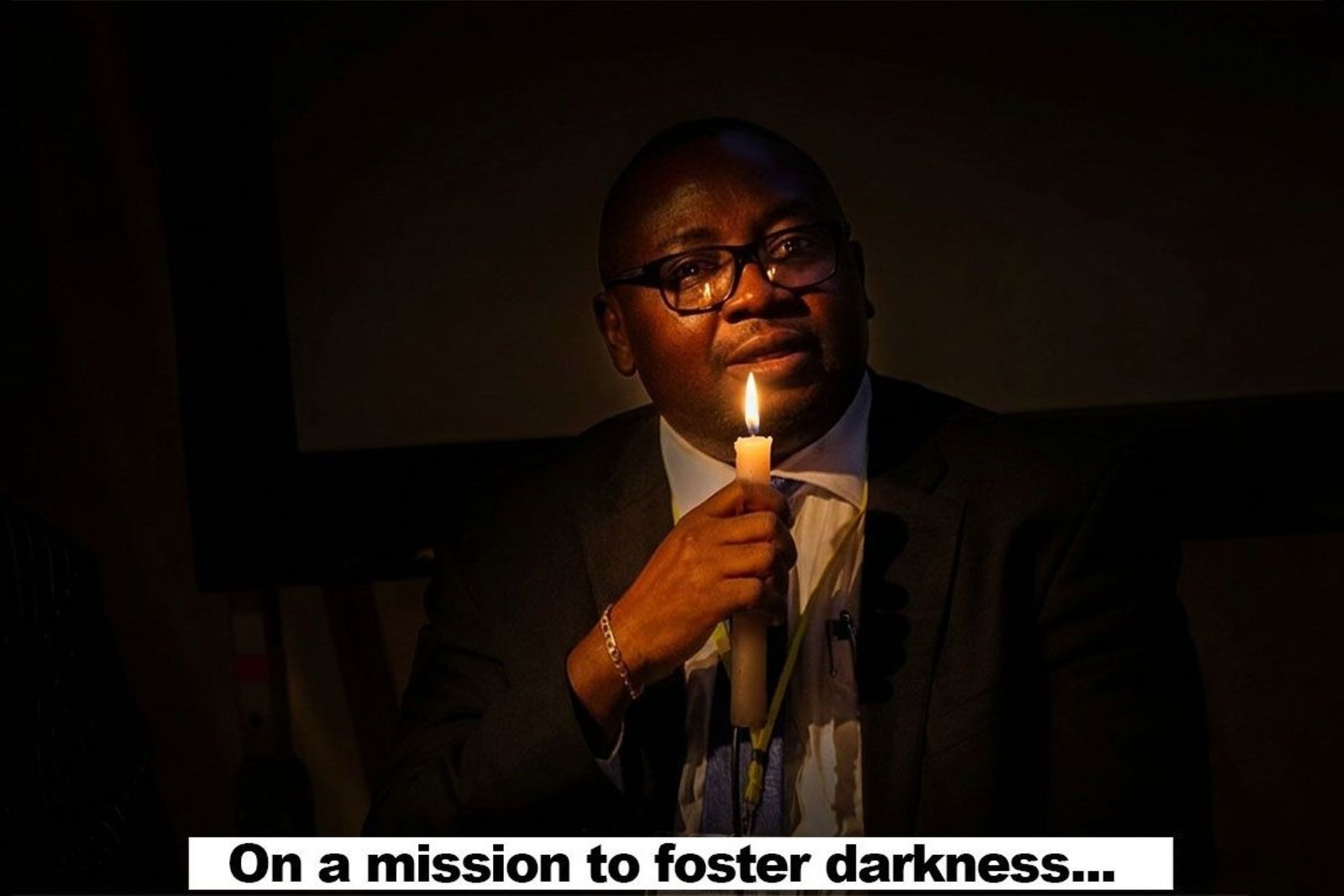
In many parts of the country, the rains poured down earlier in the week, bringing much physical and psychological relief from the searing heat.
The absence of electricity from public supply channels made it worse.
Average daytime temperatures throughout March ranged from 33 degrees to 38 degrees centigrade in Lagos and Abuja, respectively.
Nigeria’s public electricity grid must rank among the most intractable problems any developing country could face.
There is hardly anything more constant than the announcement of grid collapse, which leaves businesses and homes seeking alternatives and incurring unplanned expenses while paying for electricity not supplied.
What Candidate Tinubu promised
During his 2023 campaign, President Bola Ahmed Tinubu said that if he didn’t fix the problem, he shouldn’t be voted in for a second term.




He must be regretting that statement now.
Since the beginning of his administration in May 2023, there have been multiple grid collapses, with the highest number recorded in 2024 at 12.
Even when incidents were fewer, sporadic outages have continued.
The failure, on face value, is attributed to a mix of technical, structural and administrative weaknesses in the system.
But there is more to it in the sense in which it is said: “The more you see, the less you understand.”
So unreliable is the public electricity supply that the Presidential villa appropriated N10 billion in 2025, and an additional N7 billion in 2026 for the installation of a solar mini grid that will effectively disconnect Nigeria’s seat of power from the national grid, bedevilled by ageing transmission lines which collapse repeatedly from sabotage, poor maintenance, and frequency imbalances.
The joke is on us
Nigerians, ever ready to make a jest of their tragic maladies and long suffering, are beaten when it comes to power outages.
They are shocked beyond humour.
If the high-tension cables were not too high overhead, people in communities through which they run would not hesitate to hang their laundry on them – knowing from experience that the lines are just part of the landscape and are very likely to be without electricity.
I have seen a video of a masquerade performing on a streetlight pole.
Of course, the crowd applauded its invincibility; yet, both the crowd and the masquerade knew better.
The lines had not been electrified for months and were unlikely to be for the spell of the circus.
Hope was rekindled at the beginning of the Tinubu administration when news filtered through that the currently embattled former governor of Kaduna State, Nasir El-Rufai, had not only produced a blueprint, but was going to be given the assignment of sorting out Nigeria’s notorious electricity sector.
I learnt reliably that, as part of his plan, El-Rufai was discussing a $10 billion investment agreement with the Saudis before he ran into rough weather.
The coming of Adebayo
That was how Adebayo Adelabu took the job – a job at which he has performed so disastrously, saying he failed would be an honour.
But it’s not his fault – it’s the fault of the President who appointed him and the Senate that cleared him for a job that he was clearly incompetent to perform, either based on his record or based on any hope of redemption.
He is brilliant, but the power sector is littered with the remains of brilliant people, among whom he is now a fossil.
His better years were when he worked as an auditor at PWC.
He was also the Executive Director/CFO at First Bank, and later a deputy governor at the Central Bank.
He may not have been directly responsible for the misfortunes of these institutions at the time, but he doesn’t exactly smell of roses.
In the normal course of things, his banking career should have been a yellow flag.
Still, Nigeria being Nigeria, the quota system and political connections ensured that he defied gravity.
Then, in 2023, Tinubu offered him the position of Minister of Power, after his failed attempt to become governor of Oyo State on the platform of the Accord Party.
That only worsened our misery.
Adelabu will be best remembered for splitting electricity consumers into parallel payment bands that do not necessarily reflect improved services.
The thing is not that Adelabu failed at his job.
It’s the lack of evidence that he tried.
Mr Dan Kunle, an energy expert familiar with the history of that sector, told me that, “No one is saying a power minister should provide the resources to fix the sector from thin air.
It’s for him to provide a solid framework that would create the right environment and attract sovereign intervention.”
Adelabu, like many of his predecessors, is running the power ministry in 2026 with the 1950 operational manual of the Electricity Corporation of Nigeria (ECN).
Yet, even then, when the country had a population of about 50 million, the British knew that electricity was an economic good.
To provide meaningful and sustainable service, they had to prioritise not just the key administrative centres but also areas that could pay.
That was why, for example, coal was shipped from Enugu to the Ijora Power Station in Lagos.
No roadmap
Adelabu has no roadmap, or if he has one for a population four times what it was under ECN, it’s a roadmap to nowhere.
The same old problems persist: gas shortages, moribund plants, infrastructure deficits, massive debts, and frequent grid collapses, limiting supply to about 4,000 MW despite a capacity of 13,000 MW.
While Adelabu may wring his hands alongside Nigerians when the lights trip off, the sector has been drowning under the yoke of N6 trillion in debt as of late 2025, fuelled by non-cost-reflective tariffs and unpaid bills to both generating and distribution companies.
Some of the problems predate Adelabu, but his incompetence has worsened them.
Yet, he still has ambition. Not to redeem himself after his disastrous three years as minister, but to become the governor of Oyo State. Obviously, he believes the reward for poor performance is a higher office.
He is so shameless it means nothing to him that he holds the Olympic record for national grid collapse.
It means nothing to him that Nigerian businesses are powered by Indian generators and their homes by Chinese solar panels.
Examples from Africa
Egypt, with a population of 110 million, has 100 percent universal electricity access, supported by a heavy reliance on gas (81 percent) and growing low-carbon sources like hydropower.
This ensures a stable supply amid population pressures.
South Africa serves 85-90 percent of its 62 million residents but faces severe shortages.
Frequent load shedding persists due to Eskom’s debt, ageing infrastructure, and maintenance issues, despite high per-capita generation.
Ghana reaches 88-89 percent coverage for 34 million people, with hydro and thermal power dominating.
Urban areas enjoy near-99 percent access, while rural areas still have gaps and occasional outages.
Kenya hits 76 percent for 56 million, excelling in urban (97 percent) and geothermal power.
Rural expansion lags, though targets aim for full access by 2030.
Compared to the countries above, only 57 percent of Nigerians are grid-connected, with outages occurring 85 percent of the time, and poor metering and corruption that sustain estimated billing and inefficiencies.
After watching Adelabu perform so poorly over the last two years on the national stage, I was hoping he would go away quietly, under the shadow of the darkness he has fostered.
But since he insists that he won’t leave quietly – or appears determined to stay on – I’m considering a self-appointed mission to drag him to Oyo State to see how he will turn their night into day.

